Date
May 31, 2026
Contributor
Rooted Rising
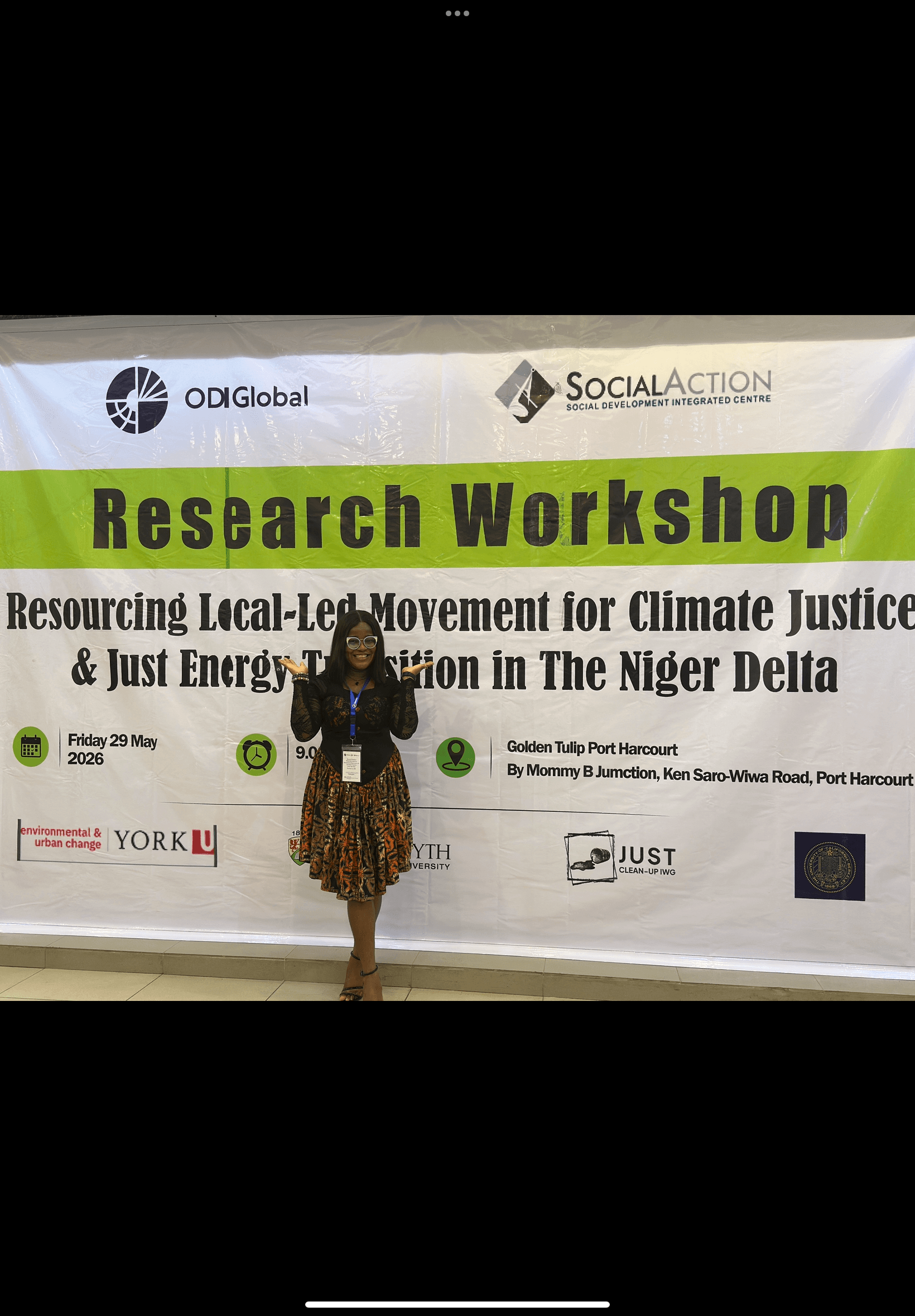
Rooted Rising Initiative was present at the research workshop for Resourcing Locally led Movements for Climate Justice and Just Energy Transition in The Niger Delta. The event started by 10am with a welcome address by the Director of Governance of ODI Group Mrs Kathryn who highlighted the barriers and opportunities facing social movements for climate justice in the Niger Delta. She mentioned she first had an intersection in the year 1997 (30 years) fighting oil pollution and the narrative has gotten worse while advocacy has been a bit louder on what is happening in the Niger Delta region. The idea was to hear participants' experience in resourcing to solve the issues in the Niger Delta region, how it has been, how it has hindered or shaped advocates ability to organise as social actors or movers. At the end there were deliberations to sustain and strengthen social movements to advance social and ecological transformation.
Mr Isaac presented the Bayelsa Report from the fieldwork synthesis where he highlighted “NGOisation” that is happening in the climate justice space. He insisted that we were to be contributors to change or transformers of society but the reality of NGO has gotten worse and the crisis we are dabbling to be fighting has gotten worse and incremental. The fight for the Niger Delta region was for the people at the local level to be beneficiaries of social change but factionalism, political engagement, survival politics and having only the political will to act has become the order for the day. We are now running on “Operation Climate Change”.
NGOs are supposed to be run in a way that people can understand (This invokes a form of local reality). They are to reconcile, introduce citizenship not minding the diversitious nature of local communities and shape the discussion in the world and not just in Nigeria. He highlighted that resourcing is a form of transformation. Climate actors especially those who engage with climate change impact like Women activistists, NGO actors, Energy & Right activists should be the drivers of social change. There's been a shrinking in local aid, localised funding and legacy foundations which on some part is because of the mistrust between funders & social change agents.
He mentioned the issue of evidence based models, funding from IOC’s and the oil & gas pollution which he deemed environmental, political and financed. He ended by highlighting the outcome of the workshop which is to understand the barriers & opportunities facing every organisation's movement for climate justice & just energy transition in the Niger Delta, experience of resourcing and suggestions on sustenance of social movement.
We had the first breakout sessions where people were broken into groups of NGOs, community people, Media and Academicians. Everyone during this session highlighted who they are serving or representing, what change they want to see and how to try to get there, the priorities for today and constraints in achieving those. For persons being served or represented are communities who are both marginalised or vulnerable because of the impact of the pollution of oil, women, youth and persons living with disabilities. Some persons highlighted amplifying the voices of these persons on climate issues and how it affects them because they are directly affected by the impact of the environmental crisis. Some persons highlighted the UNEP report as they've been asked to exit the community for clean up to be done.

There's been advocacy at the local & National level demanding for community like Ogoni community to be cleaned up properly as the clean up currently done is not a 100% and created a hashtag #cleanup #Cleanupogonicommunity. Also priority is for women to adapt to the situation (Climate finance) as there's damage & loss situation or impact. Some persons highlighted they’ve interviewed men & women on the oil spill & clean up as they've been water issues affecting women & children because before the interview a research was done before going ahead with the campaign. They discovered skin, respiratory issues had arisen from these environmental issues as the Etche women complained of crop production issues. Something must be done at the grass root in depth rather than the level it is currently. Another issue was the gas flaring that has led to skin disease and eye problem.
Priority raised where campaign against fossil fuel exploration, preventive measures and the decommissioning of oil wells, forewarned campaigns to not facing issues, getting government to listen to what is happening, impending damages rather than the revenue involved and getting people to understand the whole perspective of what is happening in the environment rather than be abysmal about it. Other priorities are getting willing volunteers who are ready to fight the fight rather than wait for donor or external support as they should be boosters rather than foundational criteria to advocacy, actualisation of the things we've been advocating for the years for, food security, test soil & get easier ways to grow crops, ongoing clean up should be good enough for exportation to other areas for reversal or remediation, repealing of the Land Use Act and Women should be part of the decision table

The whole idea of environmental advocacy should be for humanity (the human person, anywhere & everywhere). Why have there been no results and maybe we need new strategies to apply to get remediation, policy reforming and compensation to the necessary parties. Corporate social responsibility should be expanded and made mainstream, less insular as more strategies should be done. Another issue was the Emoha community environmental degradation as food insecurity is rising as they've been heavy metal & hydro carbons in the soil twenty times more than what is reported by UNEP.
The constraints highlighted were funding, community segregation as there is no oneness of mind or team bonding (strength in alliance rather than disunity), materials & logistics, transformation of mindset as religion has become a huge obstacle, issues of conflict based of PTSD of what shell company did in previous years, trust issues as some communities have heard the conversations over and over again but yet nothing has been done, believe system, CSO representation or delegated are not community oriented but political oriented and myths that women are only kitchen holders.
Notes were compared and issues arose between the media team and community for political reasons. Another breakout session was on identifying funding obstacles, harmful donor practices and ecosystem responses. Questions to be answered where:
1. What are the main obstacles faced in resourcing your work?
2. Key examples of harmful funding practices and the effect they have whether internal or external
3. Examples of good funding practices whether internal or external
4. Strategies currently employees as a group, ecosystem or individuals to overcome those obstacles
5. Strategies to be adopted as a group moving forward to improve your resourcing situation.
In this session people highlighted obstacles faced to be experienced years with other founders (A trust based approach), high competition of grants on what you've done before (Research based funding), rigorous process of accessing funds, no capacity to reach out to funders. Harmful funding practices could be NGOs limiting themselves to certain funds, wanting funding from IOC’s, Brain drain syndrome, political influences, Running with an imposed need rather than a felt need (imposition of thematic areas in affected communities), Informative & Passive collaborations rather than participatory collaboration, priorities are donor driven rather than community driven.
Good funding practices are using community initiative based approach, multi year funding, flexible and funding relationships rather than just projects. Strategies to overcome obstacles are: Beat job loss narrative, negate security risk and donor fear, advocating for participatory grant making etc. Strategies to improve the resourcing situation are encourage local led donors initiative, advocate for Corporate social responsibility by the major stakeholders of the community to be involved in advocating against the environmental impacts or crisis
Beyond funding the recommendation raised was stablishing social entreprises, holding NOSDRA, NNPC, NDDC, IBORI Everton accountable, sustained plan of engaging or compelling the necessary agencies to comply with their obligations especially the NDDC (the establishment section), running with the communities rather to be estranged from them.
A documentary of the BILLE community in Rivers state was played and the gas situation. This community has been left in ruins as theres no drinking water as they community members have to depend on drinking pure water as those who can't afford have to depend on identifying tabs to put inside the water to drink as the water from the taps looks clean from glance but after a minute it changes to black as this is an endemic for a lot of diseases to come up.
The meeting ended with Mrs Hilda saying she’ll start a 21 days media challenge tagged “Until Bille Stops burning”

Discussion & Reviews
0Overall Rating
Posting as Anonymous
Be the first to share a localized perspective